MIT and HPI AI and Creativity Hub (MHACH)
HUMAN-CENTERED DESIGN AND CREATIVITY
Through MHACH, MIT and the Hasso Plattner Institute (HPI) are working together to foster collaborative interdisciplinary research and support a portfolio of educational programs, fellowships, and faculty engagement focused on AI and creativity, expanding scholarly inquiry into AI applications across disciplines, industries, and societal challenges. This initiative is funded by the Hasso Plattner Foundation and builds on the success of the HPI-MIT Research Program on Designing for Sustainability, established in 2022.
The efforts of the MHACH initiative are intended to foster a dynamic academic community spanning MIT and HPI, anchored by Hasso Plattner–named professorships and graduate fellowships whose recipients will be actively engaged in the hub. The long-term framework is designed to provide continuity for faculty appointments, doctoral training, and cross-campus research.
The program aims to develop ambitious, long-term explorations between MIT and HPI researchers related to uniting technological excellence with human-centered design and creativity.
The initiative also supports the development of classes and educational programs in areas of shared AI focus, along with expanded experiential opportunities through AI-focused workshops, hackathons, and summer exchanges.
As we hear from our faculty, as the Information Age gives way to an era of imagination, we expect a new emphasis on human creativity. Through this collaboration, MIT and HPI are creating a shared space where students and faculty will come together across disciplines to explore new ideas, experiment with emerging tools, and invent new frontiers at the intersection of human creativity and AI.
— Sally Kornbluth, MIT President
MIT and HPI share a common commitment to turning scientific excellence into real-world impact.
— Professor Tobias Friedrich, dean and managing director of the Hasso Plattner Institute
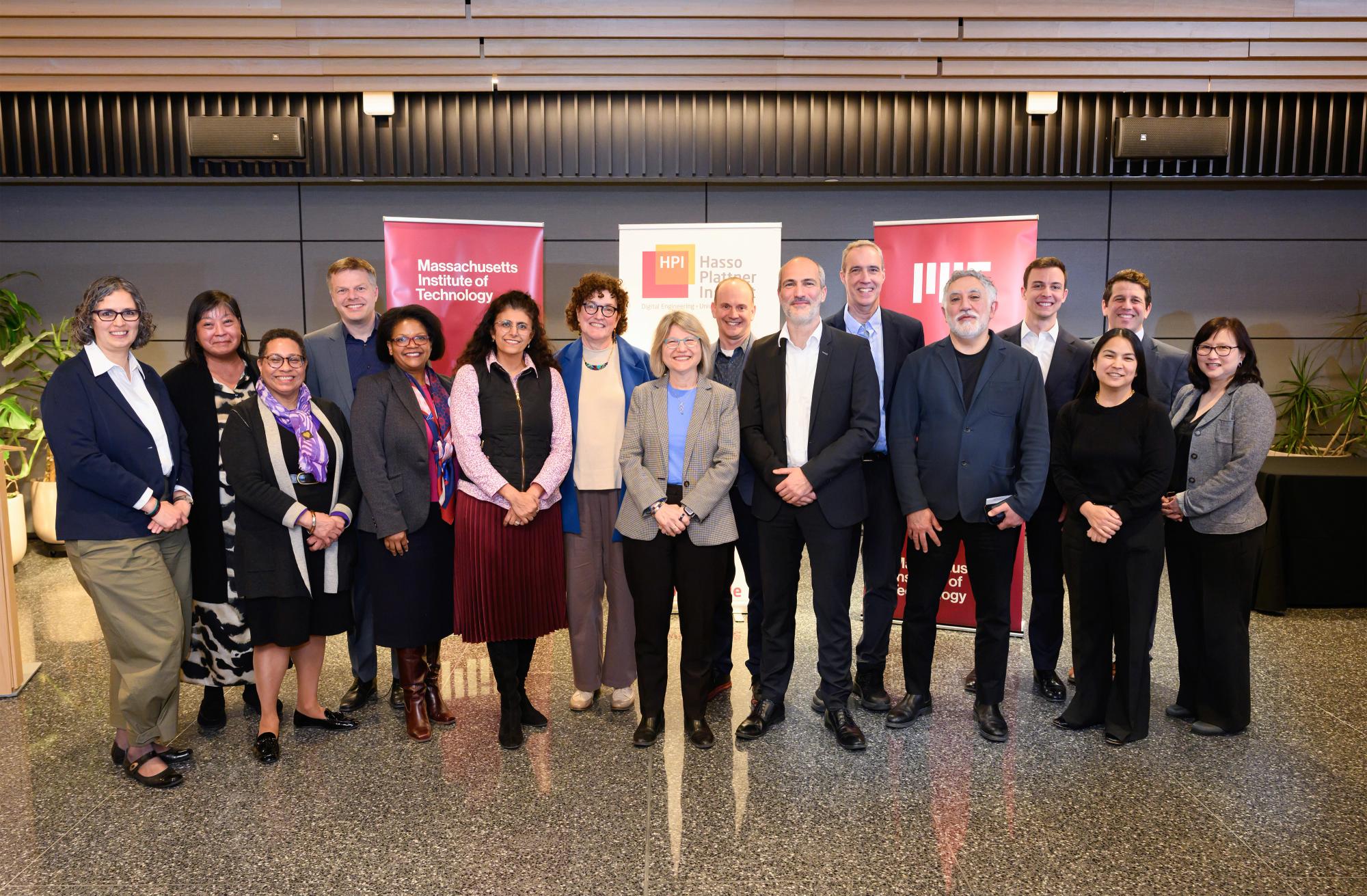

MIT and HPI AI and Creativity Hub (MHACH) Signing Ceremony
Photo: Gretchen Ertl
2026-27 Call for Proposals
The Call for Research Project Proposals and Call for Engagement Seed Funding Proposals are available via the link below and include details about the program components and eligibility. Applications are due on June 3, 2026.
Link to Application
Open to MIT and HPI Principal Investigators
Designing for Sustainability Program
In 2022, HPI and MIT co-created Designing for Sustainability, a research program funded by the Hasso Plattner Foundation. Research teams focuses on sustainable design, innovation, and digital technologies.