GEO–MATTERS with Roi Salgueiro Barrio
part of the LCAU and SMArchS Urbanism Lecture SeriesApr 2, 2026
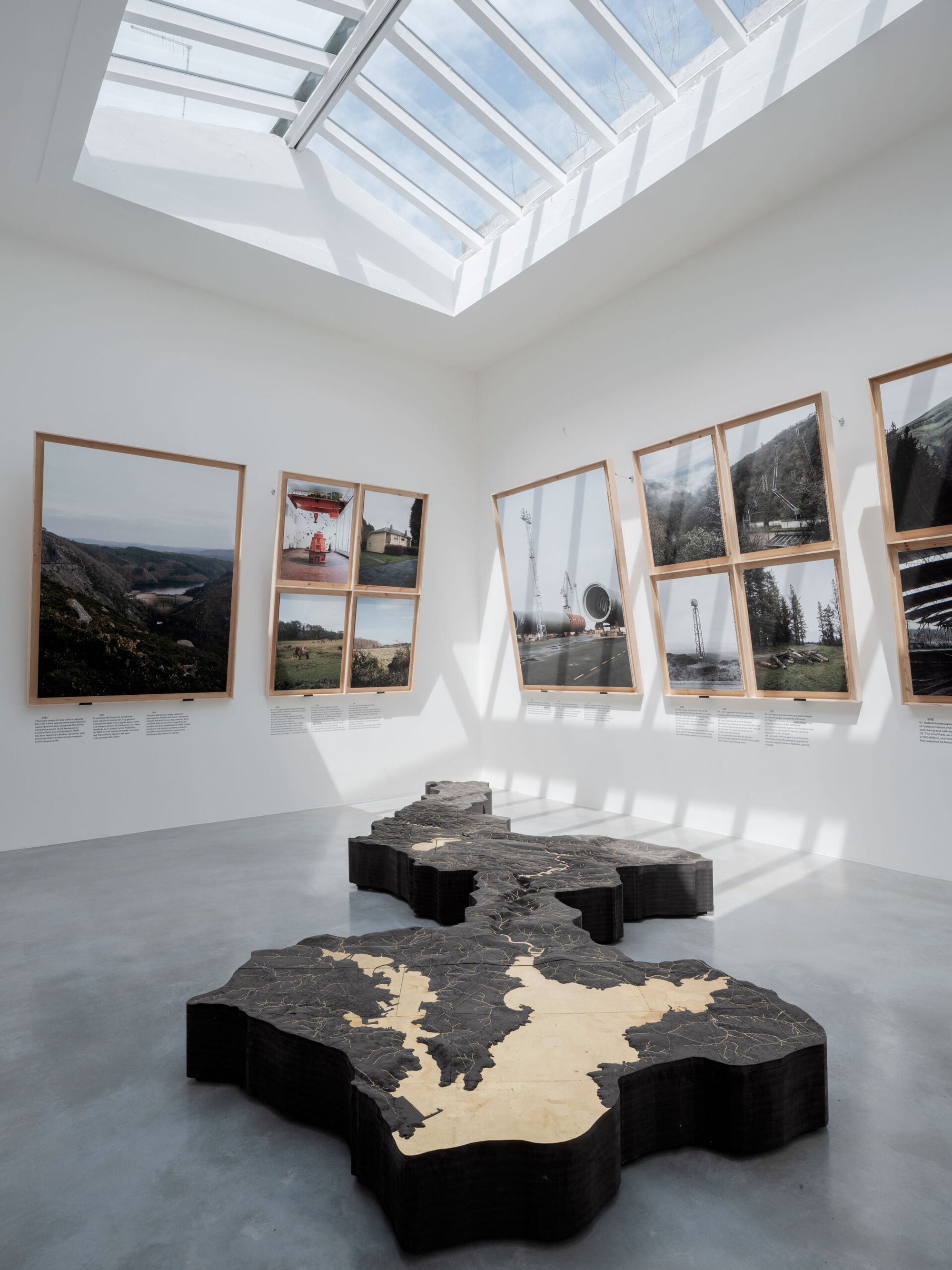

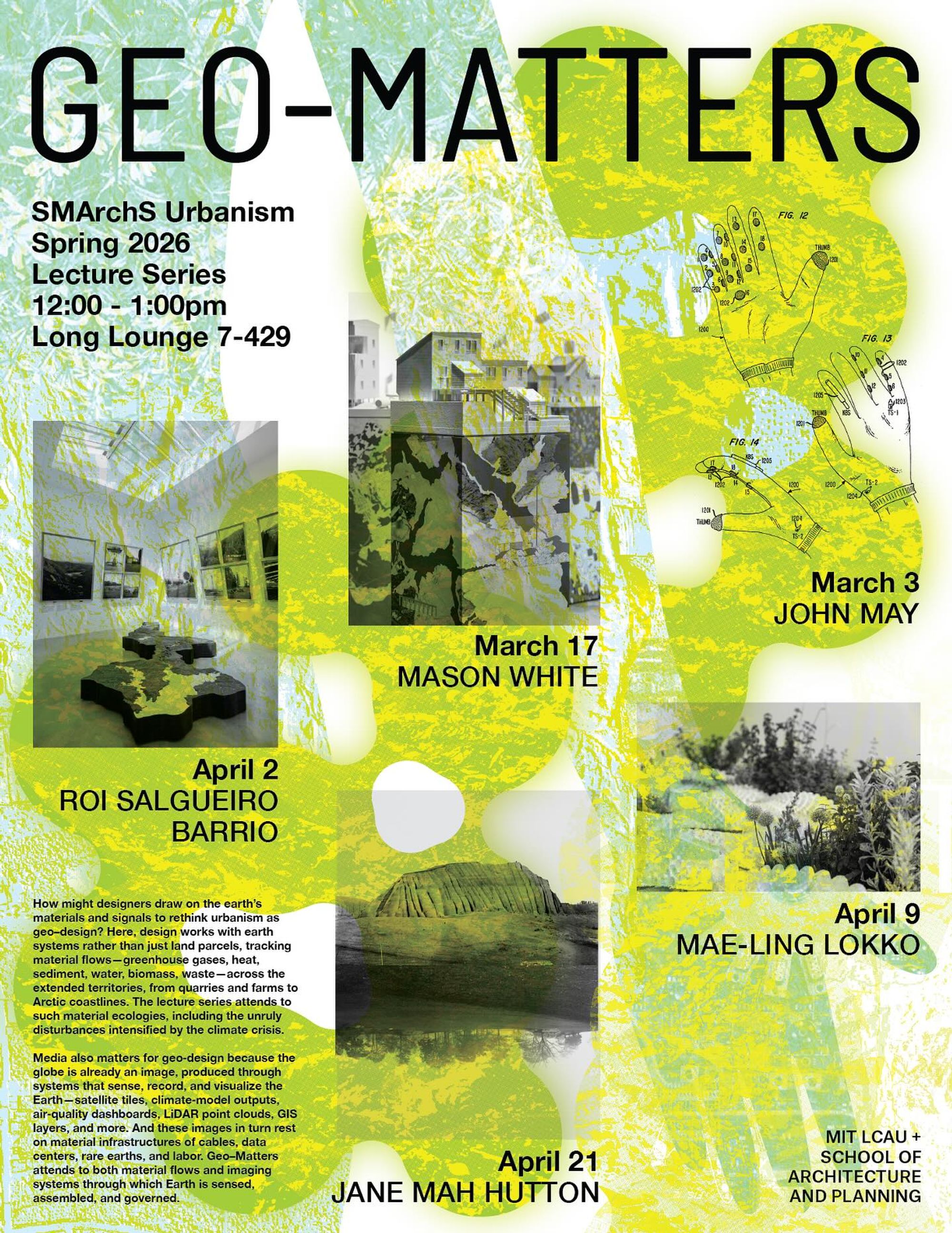

GEO–MATTERS asks how designers might respond to the earth’s matter, forces and signals. The lecture series attends to matter and material ecologies, including the unruly disturbances intensified by the climate crisis. Here, design works with earth systems, tracking material flows—greenhouse gases, heat, sediment, water, biomass, waste—across the extended territories, from quarries and farms to Arctic coastlines. Media also matters for geo-design because the globe is already an image, produced through systems that sense, record, and visualize the Earth— satellite tiles, climate-model outputs, air-quality dashboards, LiDAR point clouds, GIS layers, and more. GEO-MATTERS attends thus to geographic situatedness, material ecologies, and imaging systems through which Earth is assembled and geo–design is practiced.
This series was organized by Rania Ghosn, Associate Professor in the Department of Architecture and Director of the SMArchS Urbanism Program.
Please RSVP to help us get a headcount for food.
RSVP
FEATURED
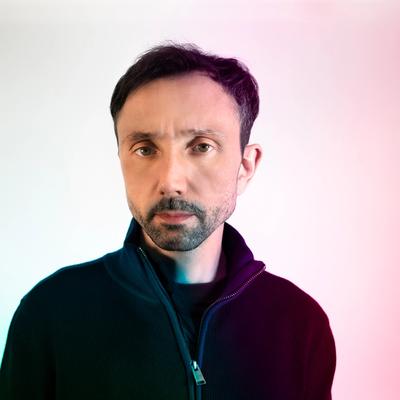
Roi Salgueiro Barrio
Curator-Director, Lecturer
Roi Salgueiro Barrio is an architect and urbanist whose work focuses on the interrelations between architecture, systems of territorial organization, and globalization. He is the founder of design practice RSAU, a lecturer at MIT Department of Architecture and the curator-director of the MIT Morningside Academy for Design.
Salgueiro Barrio is the author, with Hashim Sarkis and Gabriel Kozlowski, of “The World as an Architectural Project” (2020). His research has been widely published in academic journals (New Geographies, Log, The Journal of Architectural Education, San Rocco, Architecture, City and Environment, and CARTHA), and featured in The Washington Post, ArchDaily, Abitare, Metropolis Magazine, World-Architecture, among other publications. He is a member of Actar Publishers scientific committee, and a founding member of the research collaborative ASIDE.
He was the principal assistant curator of the 17th Venice Architecture Biennale (2021). His work has been internationally exhibited at the Lisbon Triennale, the Shenzen and Hong Kong Bi-City Biennale of Urbanism, Museum of Contemporary Art of Chile University, the ETH Zurich, Yale School of Architecture, and Sao Paolo Faculty of Architecture.
Salgueiro Barrio holds a Master in Architecture, with distinction, from the University of Navarra, a Master in Design Studies, with distinction, from Harvard University, and he graduated summa cum laude with a PhD in architectural design, international, from the Polytechnical University of Barcelona.

Sarah Williams
Associate Professor, DUSP; Director, MIT Leventhal Center for Advanced Urbanism
Sarah Williams is an associate professor of technology and urban planning at MIT, where she is also director of the Civic Data Design Lab and the Leventhal Center for Advanced Urbanism. She combines her training in computation and design to create communication strategies that expose urban policy issues to broad audiences and create civic change. She calls the process Data Action, which is also the name of her book published by MIT Press in 2022.
Williams is co-founder and developer of Envelope.city, a web-based software product that visualizes and allows users to modify zoning in New York City. Before coming to MIT, she was co-director of the Spatial Information Design Lab at Columbia University’s Graduate School of Architecture, Planning and Preservation.
Her design work has been widely exhibited, including in the Guggenheim Museum, the Museum of Modern Art, Venice Biennale, and the Cooper Hewitt Smithsonian Design Museum. Williams has won numerous awards, including being named one of the top 25 technology planners and Game Changer by Metropolis Magazine. Her latest exhibition at the World Food Program, Distance Unknown, explores the risks and opportunities of migration to the Americas. The exhibit helped to influence recent U.S. migration policies.